Limestone and travertine pool surrounds: a care guide
Understand outdoor stone finishes, filled areas, marks and sealing before arranging a limestone or travertine pool-surround clean.
Identify the stone and its finish
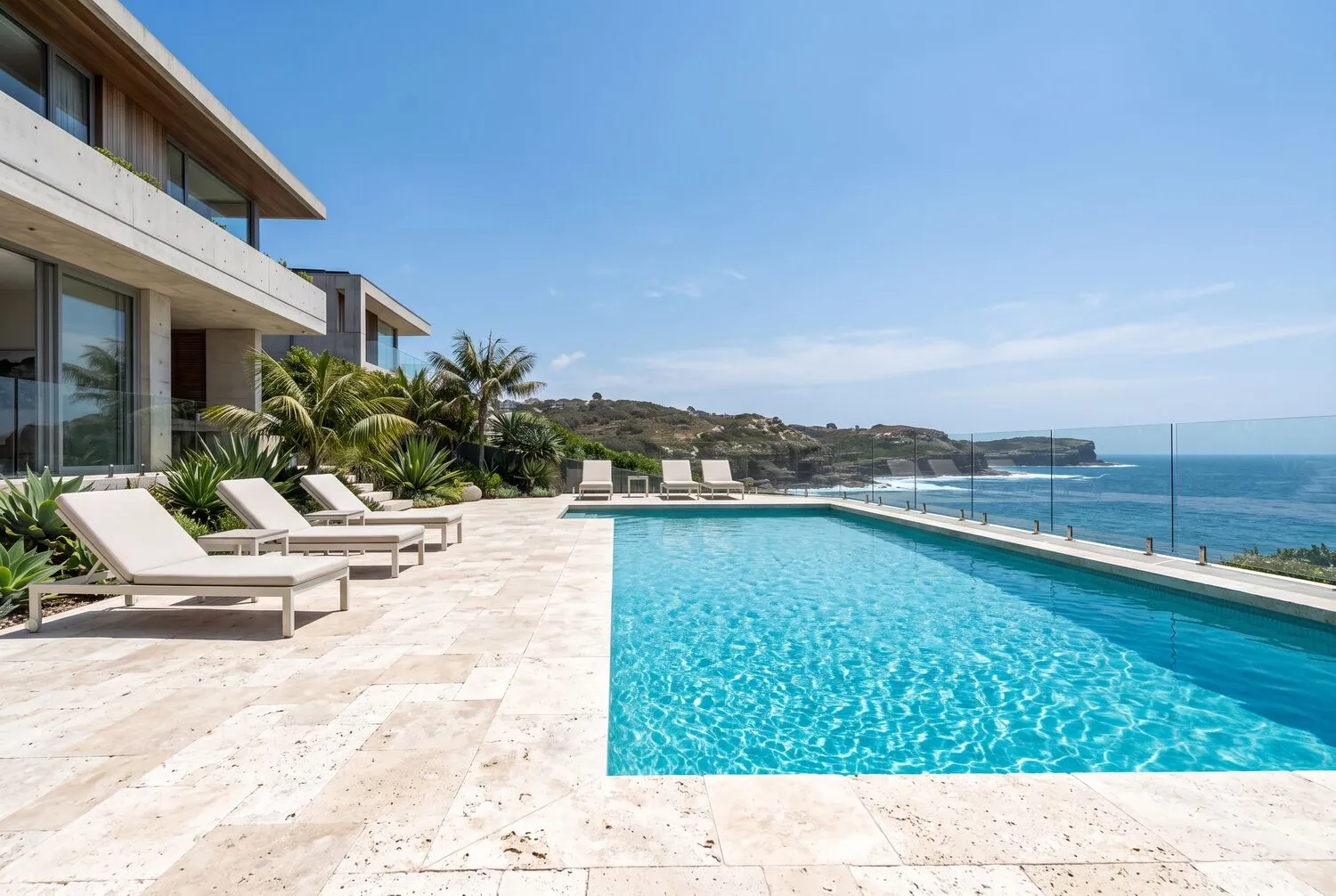
Limestone and travertine can create an attractive outdoor setting, but the name of the stone is only the start of a care plan. The surface may be honed, textured, tumbled or treated with an existing product. Travertine can also contain natural openings and filled areas. Each detail can affect how the installation responds to cleaning. If you have the supplier’s specification or installer’s maintenance instructions, keep them with your enquiry. If not, clear close-up photographs of the finish, joints and visible marks can help with the initial assessment. Include the whole pool edge and adjoining outdoor area too. A photograph taken only while the stone is wet may hide appearance differences, so a dry overview is useful when practical. The objective is to establish what is present before choosing a method. Neither the apparent hardness of the paving nor its outdoor location means it should automatically receive aggressive pressure or a general household cleaning product. Compatibility needs to be checked against the actual stone, finish and condition.
Separate staining from surface damage
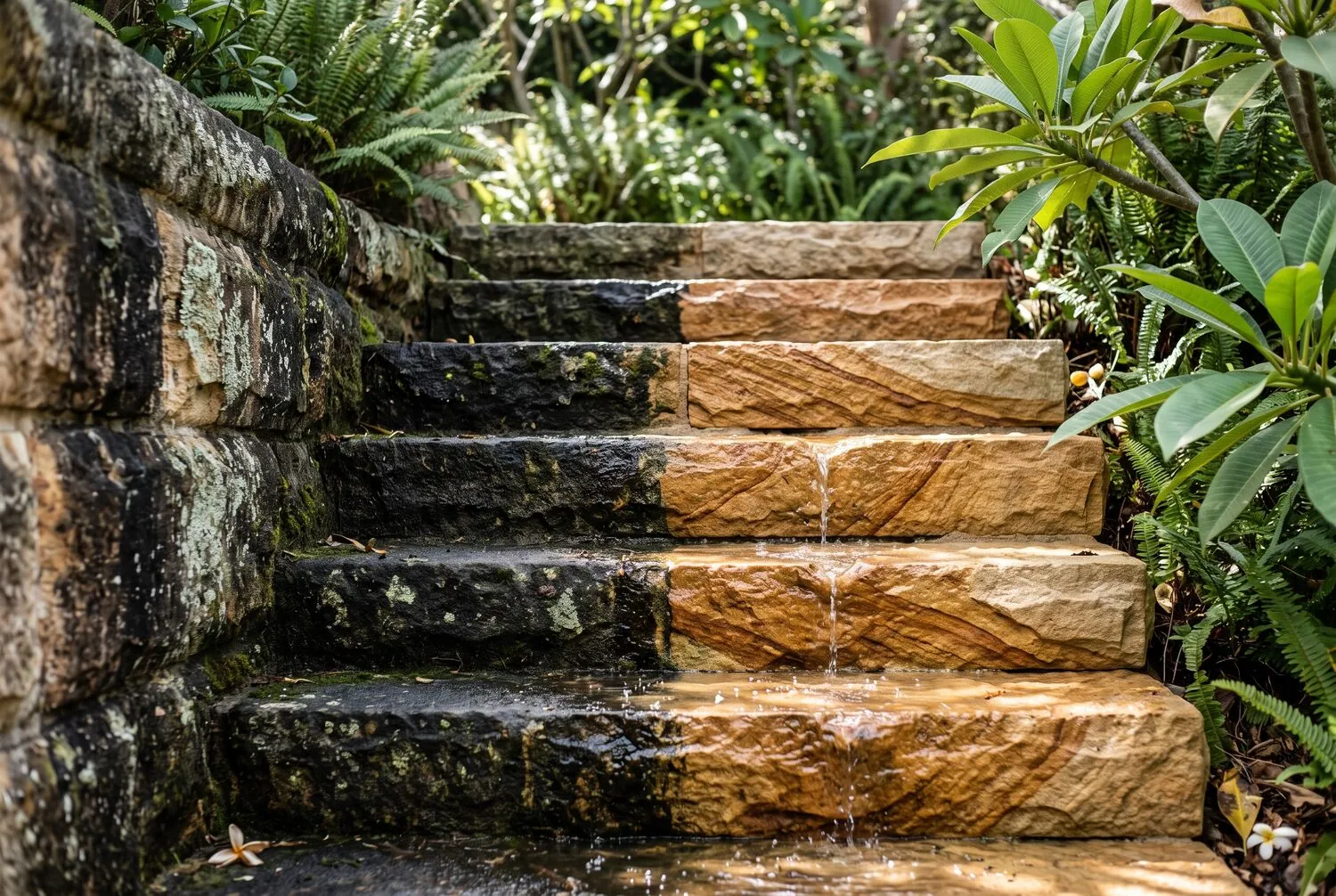
A pale ring, dull patch or uneven sheen may be a change to the surface rather than dirt sitting on it. Limestone and travertine can be damaged by acidic substances, and an etched area may need specialist restoration rather than ordinary cleaning. Other marks may be deposits or stains that require a separate assessment. The distinction matters because more force is not necessarily a better response. Before booking, photograph different kinds of marks separately and explain any known spills or previous treatment. Tell us whether the appearance changes when the stone dries. Avoid experimenting with an unfamiliar product simply because it is marketed for outdoor use. The suitable treatment depends on the material and finish, and nearby glass, metals, joints and planting also need consideration. A test area may help establish the response, but it should be used to set realistic expectations rather than imply every mark can be removed. A clear quote will distinguish general cleaning from restoration and any targeted stain treatment that may or may not be worthwhile.
Check joints, filler and the pool edge
Travertine with loose filler or open joints needs a condition review before cleaning. Some existing weak material may become more apparent during the work, and cleaning does not replace missing filler or grout. Movement in individual pavers is also a maintenance issue that should be addressed separately. Around any stone pool surround, the edge, drainage and nearby fittings influence the plan. Show drains, outdoor showers, glass fencing and the route to the area in your photos. Furniture and portable items may need to be cleared, while fixed features should be identified in advance. Water management must be considered rather than assuming the pool is an acceptable destination for rinse water. If part of the terrace sits over an occupied room, disclose known waterproofing or drainage concerns before a method is agreed. These practical points help define what can be cleaned and how. They also avoid confusing a cleaner surface with a repaired or certified installation, which requires a different assessment and may involve other specialists.
Consider sealing without expecting a cure-all
Sealing may be appropriate for some outdoor stone, but it is not an automatic requirement or a complete solution to staining. The proposed product must suit the stone, finish, existing treatment, moisture conditions and way the area is used. A pool surround that is regularly wet should not be assessed only by how it looks on one dry day. Ask whether the product is penetrating or forms a surface coating, how it may change appearance and what preparation is required. A sample can help you compare visual outcomes before a larger application. Drying and curing requirements also matter when planning access for swimmers, pets and furniture. A suitable sealer may reduce absorption of some contaminants, but spills still need prompt attention and the stone still needs maintenance. Sealing does not repair loose pavers, correct drainage or remove etched damage. It should therefore appear as a separate, explained item in the quote, with product-specific guidance rather than a blanket promise of a fixed lifespan or a maintenance-free surface.
Build a practical maintenance routine
After cleaning, care should follow the stone supplier’s and any sealer manufacturer’s instructions. Keep loose debris from accumulating, respond to spills promptly and use products confirmed as compatible with the finish. Avoid treating every new mark as a reason to increase pressure or mix stronger cleaners. If an area repeatedly stays wet or collects soil from a garden bed, investigate the source rather than relying on repeated cleaning alone. Record the products used during professional work so a future assessor does not have to guess what is on the stone. It is also useful to keep a few dry photographs of the completed area for your own reference. Delicate Surface Cleaners can assess limestone and travertine alongside nearby house surfaces or windows, while keeping the care method specific to each material. Send the stone details, approximate area and access photographs when you enquire. A defined scope helps you understand what the clean can improve, what may remain and whether separate restoration, repair or sealing deserves consideration.
Let’s make a plan for your home.
Share the surfaces you would like assessed and the areas that concern you. Start with a free quote request.
Get a free quote