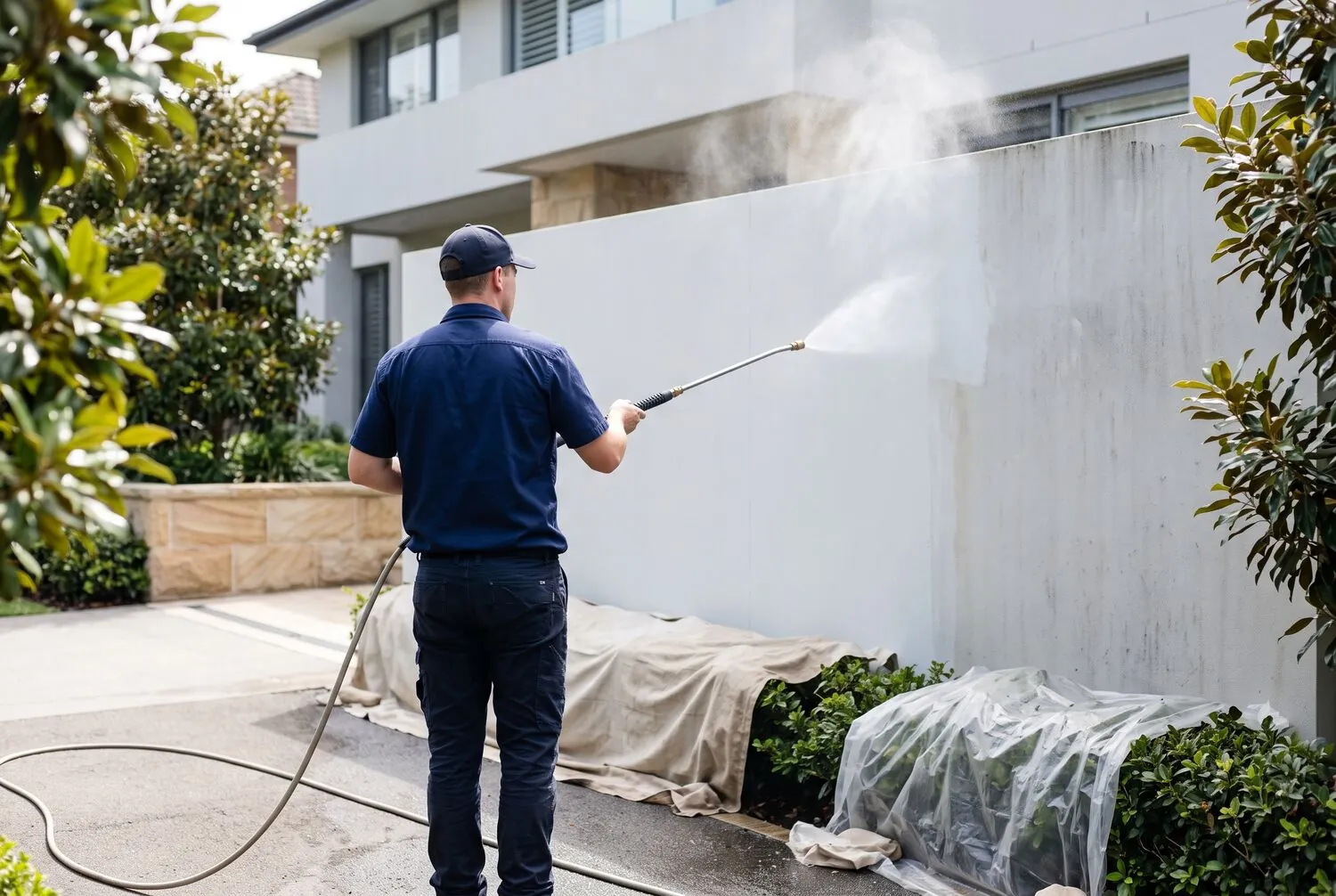
Sandstone cleaning: what to check before you book
How stone condition, joints, moisture and past treatments affect sandstone cleaning, and why an honest assessment matters more than a new-stone promise.
Look beyond the dark surface marks
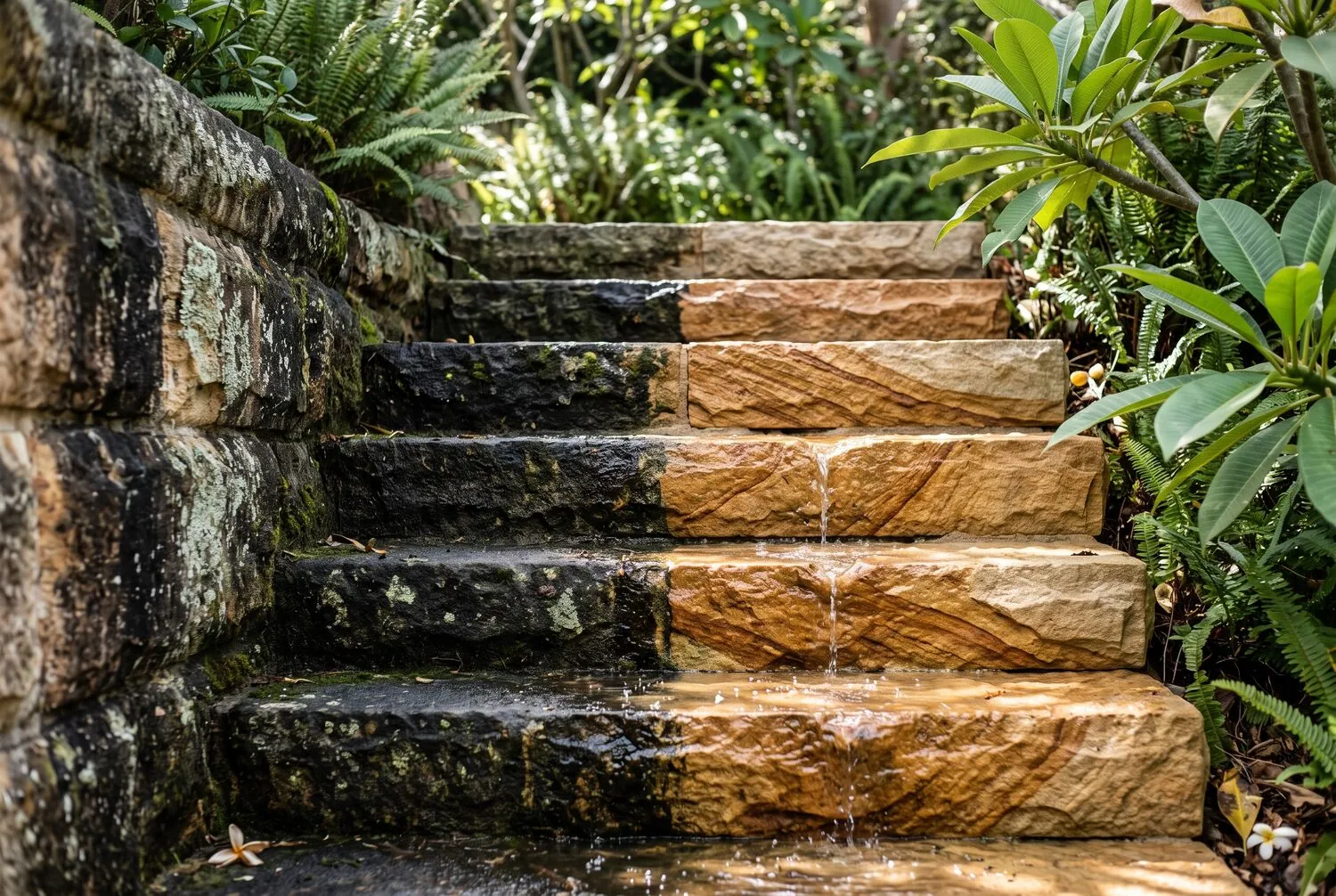
A dark sandstone wall or path can be visually distracting, but colour alone does not explain what is happening. Ordinary dirt, organic growth, embedded stains, moisture and the natural variation of the stone may all contribute to its appearance. Weathering can also create uneven texture that cleaning will not reverse. Before booking, take a wide photograph showing the whole installation and closer images of the marks that concern you. Include step edges, joints and any areas that look loose or flaky. A wall should also be photographed at its base, where recurring damp can become apparent. Try to explain whether the marks are recent, seasonal or present all year. These observations help establish useful questions for the assessment. They do not diagnose the stone on their own. The important distinction is between contamination that may be removed and changes to the material itself. A cleaning plan should acknowledge both, rather than suggest every dark patch has the same cause or that the original colour can always be recovered.
Stone condition sets the limits
Sandstone varies, and the installation’s current condition matters as much as its name. A sound paving slab can behave differently from a weathered wall face or a heavily worn step. Loose grains, flaking surfaces and deteriorated mortar can limit the suitable method. If a feature is fragile or historically significant, specialist conservation advice may be more appropriate than a routine exterior clean. Repairs may also need to come first. During the assessment, ask how the method will be selected and whether an inconspicuous test would be useful. The purpose of a test is to observe the response and establish expectations, not to force a dramatic result in one small square. Cleaning should not be presented as a way to repair worn edges or rebuild weak joints. It may reveal existing defects more clearly once surface contamination is removed. A written scope should explain any exclusions and areas that will be approached differently, so you understand the limits before work begins rather than discovering them after the stone has been treated.
Ask where the moisture comes from
A shaded sandstone path beside an irrigated garden may remain damp for reasons that a cleaning service cannot resolve. A retaining wall may show recurring marks where moisture travels through the structure. If water regularly pools on paving, drainage or levels may need investigation. These conditions do not automatically mean cleaning is impossible, but they affect both suitability and expectations after the work. Tell the assessor where damp returns and whether it changes after rain or watering. Avoid assuming that a stronger treatment will solve a persistent building or garden issue. The surrounding layout also matters on the day of the clean. We need to consider the route of rinse water, neighbouring finishes, garden beds and the lowest point of the area. For stairs or split-level terraces, show what sits below the stone. A considered plan accounts for these practical details. It separates a cleaner-looking surface from claims about waterproofing, structural repair or permanent prevention of future growth, none of which should be inferred from an ordinary stone-cleaning quote.
Cleaning and sealing are separate decisions
It is common to ask whether sandstone should be sealed as soon as it has been cleaned. The answer depends on the particular stone, its exposure, moisture conditions, existing treatment and intended use. A product suitable for one installation may not be suitable for another. Penetrating sealers and surface coatings also behave differently, so the product type and expected appearance should be explained. If a previous sealer is present, its condition and compatibility need assessment before adding anything new. A sample can help you judge visual change, but it does not remove the need to check product requirements. The surface must have the preparation and drying conditions specified for the selected system. Sealing is not a substitute for fixing persistent damp or drainage problems, and it does not make sandstone stainproof or maintenance free. Think of it as a separate, material-specific decision after the cleaning assessment. The quote should make clear whether sealing is included, what it is intended to do and what ongoing care will still be required.
Prepare an enquiry that gets a useful answer
A useful sandstone enquiry includes more than a close-up of the darkest patch. Send the full area, approximate size, access route and clear photographs of edges and joints. Tell us whether the stone is a wall, path, stairway, pool surround or terrace, and whether any previous cleaning or sealing products are known. Note loose sections, recent repairs and areas that stay damp. If the stone is part of a heritage-sensitive property, establish any relevant requirements before approving work. You can also explain your priority: improving an entrance, preparing an outdoor space for use or assessing the whole property. That makes it easier to define a practical scope. Delicate Surface Cleaners reviews the material and surrounding layout before recommending treatment. The aim is a considered improvement with clear expectations. Ask for general cleaning, unusual stain treatment and optional sealing to be identified separately, so you can decide what is worthwhile without relying on an unrealistic promise that old sandstone will look newly installed.
Let’s make a plan for your home.
Share the surfaces you would like assessed and the areas that concern you. Start with a free quote request.
Get a free quote