Pressure cleaning, considered for your Bronte property.
If a Bronte hard surface sits on a lower garden level, show how equipment reaches it and where water could collect. Concrete, stone and timber nearby should not receive one assumed method. We identify suitable pressure-cleaning areas and discuss preparation for adjacent delicate materials. Pressure is matched to the assessed material rather than set to a universal level. The quote defines suitable areas, preparation and limitations; embedded stains, cracks and failed joints may need separate attention.
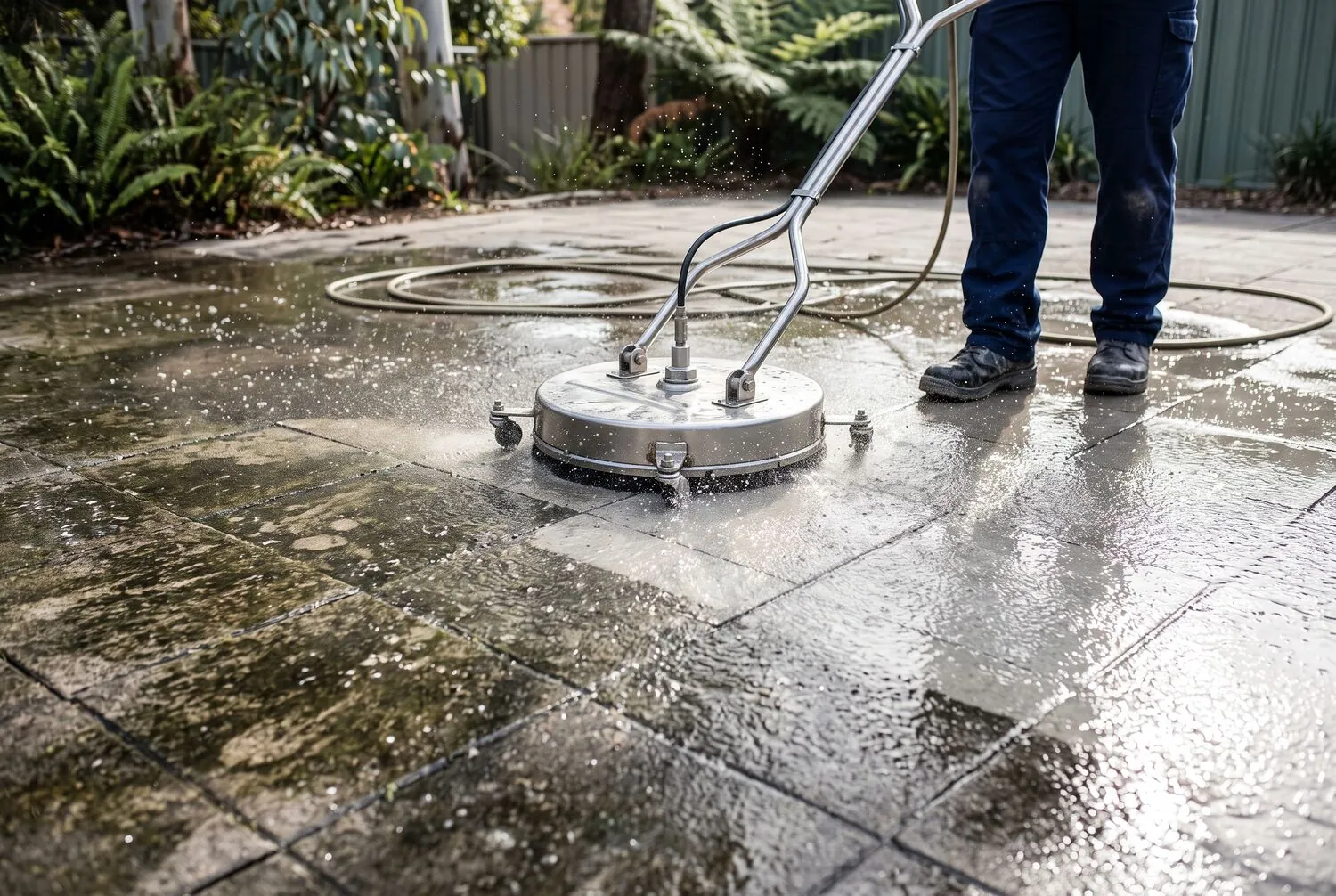
Outdoor spaces are often the priority when planning a Bronte exterior clean. We assess terraces, pool surrounds, paths and house surfaces as individual materials, then build a sensible sequence for the work. You receive clear expectations for the visible marks, preparation and areas that may need repair or separate stone restoration.
Choose the surface, then the method
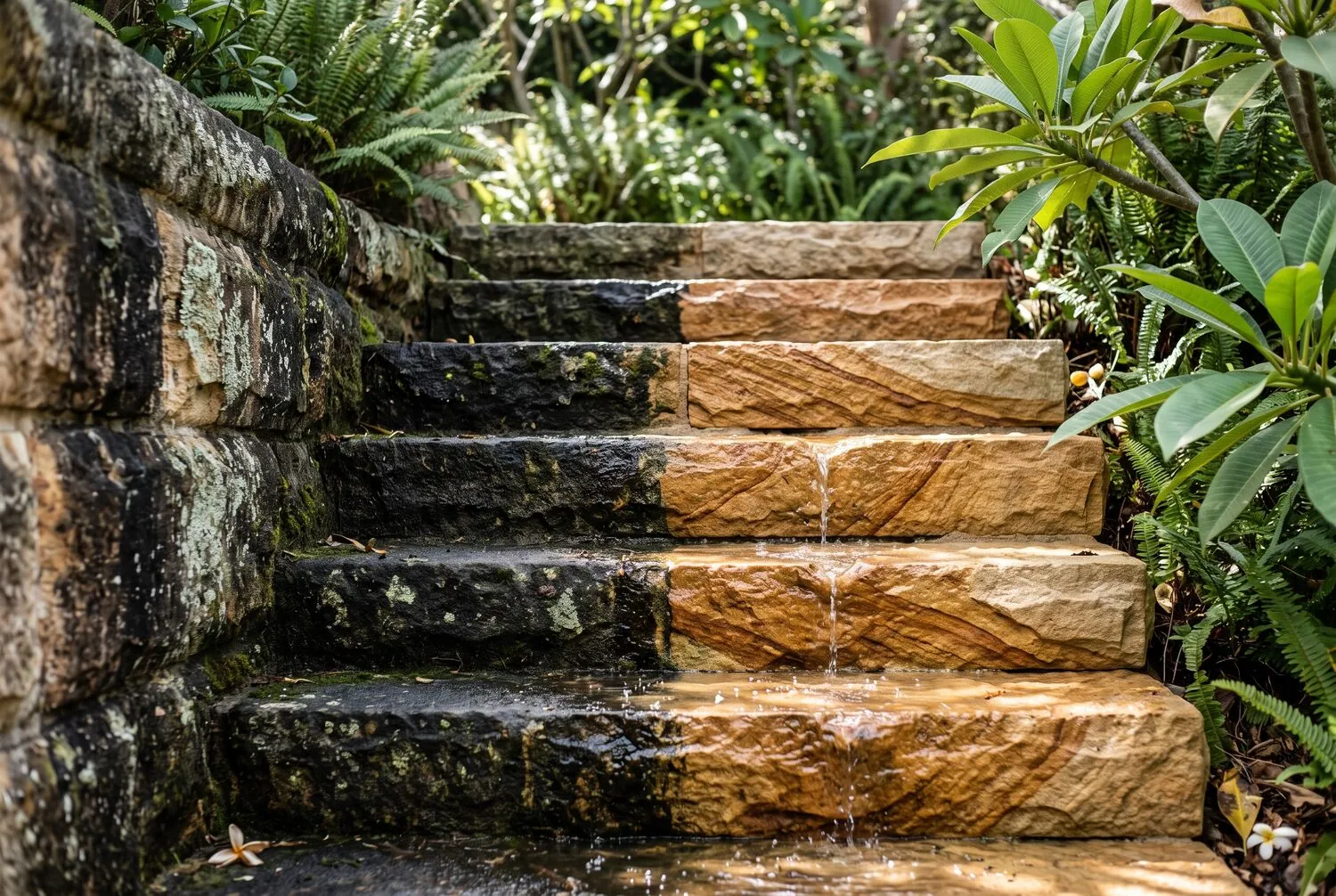
A sound concrete path is not the same as painted render, soft stone or an ageing deck. We identify coatings, cracks and weak joints before selecting the cleaning method. Where pressure is unsuitable, we explain the alternative or exclude the area rather than apply the same approach everywhere.
Address the whole work area
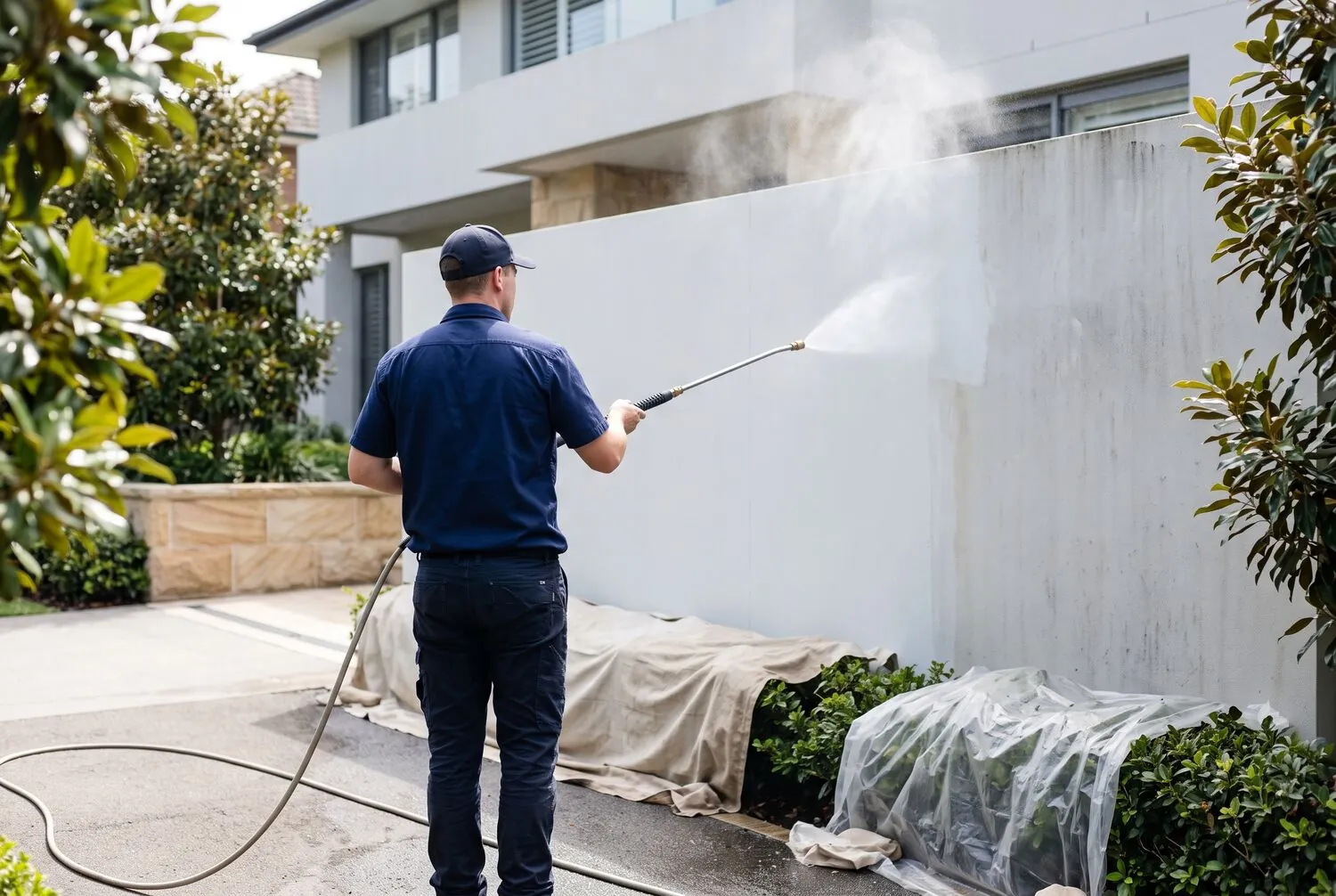
Furniture, parked vehicles, external outlets and nearby glazing all affect preparation. Runoff and drainage are considered before cleaning begins. Clear access helps us work consistently, while sensitive adjacent surfaces may need additional preparation or a change in technique.
Be realistic about embedded marks
Oil, rust, tyre marks and old coating stains may remain after a general clean. Targeted stain treatment can be assessed separately, with results depending on the material and how long the contamination has been present. Cleaning will not repair cracks, level uneven paving or replace lost jointing material.
What we look at before quoting.
- Identification of suitable hard surfaces
- Agreed preparation and access requirements
- Cleaning of the measured scope
- Rinsing and review of the treated area
- Advice on stain and repair limitations
A clear scope before work begins.
Surface area is only part of the picture. The material, amount of growth, staining, access and protection needed all affect the work. Share the relevant details in your enquiry so the quote can be specific to your home.
Planning the visit in Bronte.
If the home sits on a sloping block, let us see the level changes between the street, house and rear garden. The lower end of the site is important when planning rinse water. A sun-exposed terrace and a shaded path beside planting may show different kinds of contamination. Around pools, stone finish, joints and the proximity of water need their own assessment. Outdoor showers, timber furniture and metal fixtures can introduce further material changes. We ask about previous sealing and any recurring damp areas so a clean is not mistaken for a solution to drainage or building issues.
Let us know about gates, steps, on-site parking, water access and any strata approval required. Identify sensitive landscaping, recently installed finishes and anything that should not get wet. These details help plan the work and reduce disruption on the day.
Understanding the finish.
Cleaning can remove surface dirt and growth, but cannot reverse etching, structural damage or worn coatings. Stains may respond differently and some marks can remain. Any limitations, test requirements or specialist repairs should be discussed before work is agreed.
Ask about your surfaces