
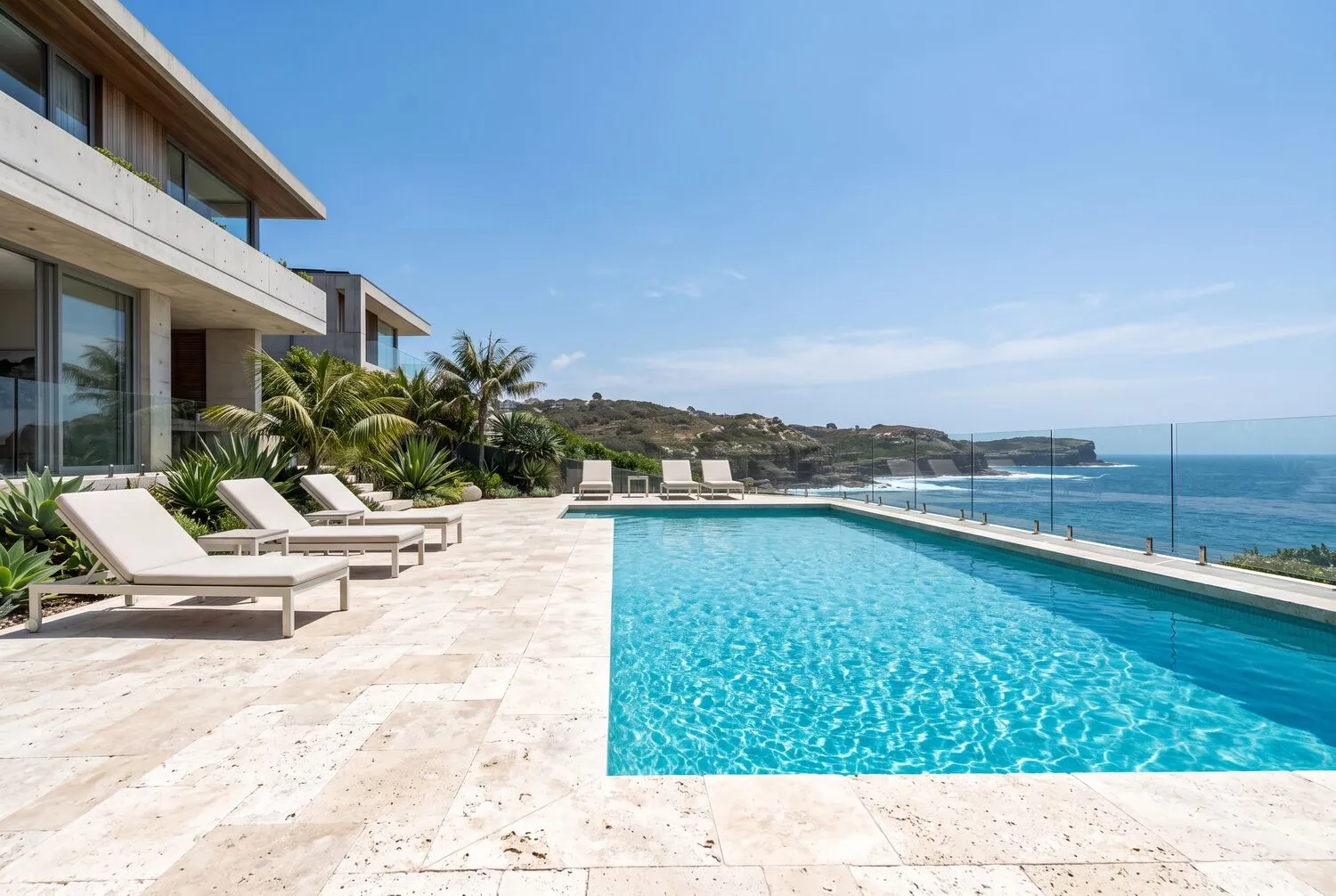
Travertine cleaning, considered for your Tamarama property.
If your Tamarama travertine terrace has an open edge, glass railing or limited drainage, include those features in the photos. We assess preparation and water management alongside the stone. Loose filler, damaged joints and old coatings can change what is appropriate for the installation. The cleaning method is selected for the finish, joints and visible condition. A test can help establish suitability. Cleaning does not replace missing filler, repair movement or make the stone look uniformly new.
A well-planned clean considers the spaces around the surface as much as the surface itself. For Tamarama homes, we assess terraces, exterior walls, windows and stone with level changes and access in mind. The method follows the material and its condition, with realistic advice on stains, weathering and any specialist work needed.
Check the stone and its filled areas
Travertine may have natural voids, filled holes and worn edges. Loose filler or deteriorated joints can be made more obvious by cleaning. We identify visible vulnerabilities and may recommend repair before work proceeds. Cleaning does not refill holes, replace missing grout or correct movement in the installation.
Work with the finish
Textured, tumbled and honed finishes need individual consideration. We select a compatible method for the surface and the contamination present. Acidic household cleaners and aggressive treatment can damage this type of stone, so product selection and a measured test are more useful than a one-method-fits-all approach.
Think beyond the day of the clean
Pool splash, soil from planting and outdoor meals can all leave different marks. We explain any remaining staining and discuss ordinary maintenance after cleaning. If sealing is appropriate, it is quoted separately and applied only after the required preparation and drying conditions are met.
What we look at before quoting.
- Inspection of finish, joints and visible filler condition
- Suitable test cleaning where needed
- Cleaning of the quoted outdoor stone area
- Identification of marks that may require restoration
- Optional stone-sealing assessment
A clear scope before work begins.
Surface area is only part of the picture. The material, amount of growth, staining, access and protection needed all affect the work. Share the relevant details in your enquiry so the quote can be specific to your home.
Planning the visit in Tamarama.
If your property has an elevated outdoor area or limited space around the building, wide photographs are especially useful. They show how equipment might reach the surface and where water could travel. Exposed glazing, pale stone and painted walls can each have different marks, and those marks should not be treated as the same problem. We review the condition of joints and coatings before proposing work. Wind and other site conditions can affect scheduling for exposed areas. Where a terrace sits above an occupied room, known drainage or waterproofing concerns should be discussed before any cleaning method is agreed.
Let us know about gates, steps, on-site parking, water access and any strata approval required. Identify sensitive landscaping, recently installed finishes and anything that should not get wet. These details help plan the work and reduce disruption on the day.
Understanding the finish.
Cleaning can remove surface dirt and growth, but cannot reverse etching, structural damage or worn coatings. Stains may respond differently and some marks can remain. Any limitations, test requirements or specialist repairs should be discussed before work is agreed.
Ask about your surfaces