Does your outdoor stone need sealing?
A guide to deciding whether sealing suits your outdoor stone, including existing coatings, moisture, appearance, preparation and ongoing maintenance.
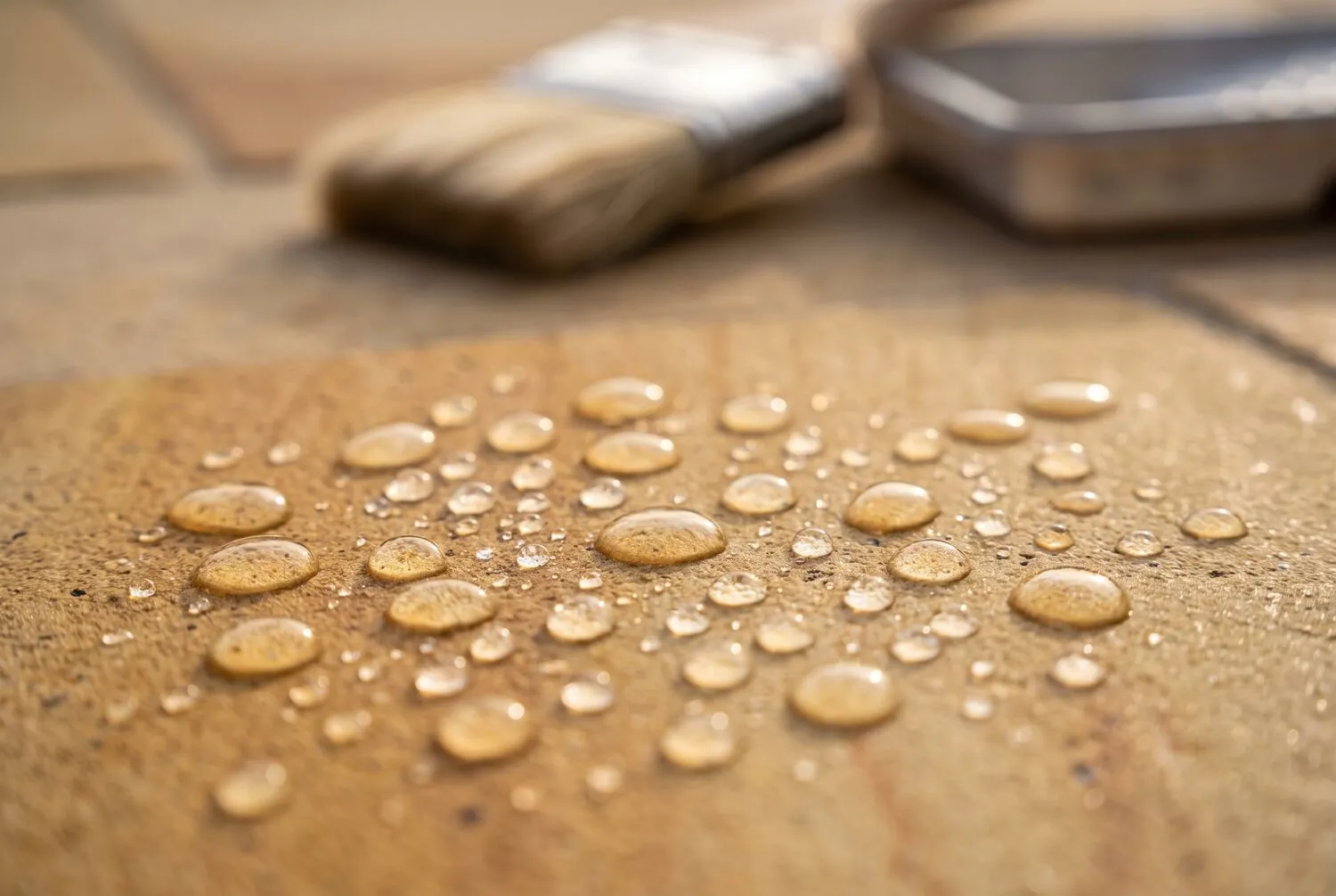
Treat sealing as a decision, not a default
It is easy to assume that all outdoor stone should be sealed as soon as it is clean. In practice, suitability depends on the material, installation, exposure, existing treatment and how the area is used. A shaded wall is not the same setting as a dining terrace or regularly wet pool surround. The desired appearance also matters. Some owners want minimal visual change, while others ask about enhanced colour or a different finish. Those preferences should be discussed before a product is selected. Start by collecting any information from the stone supplier or installer. If the surface has been treated before, keep the product name and application details where possible. When those details are unknown, the assessment may need to investigate the existing finish rather than simply add another layer. A useful recommendation explains why a particular system is suitable and what it is expected to achieve. It should not imply that sealing is a universal upgrade, a repair method or a way to avoid future care. For some installations, further investigation or a different maintenance approach may be the better next step.
Understand the product type and appearance
Penetrating sealers and topical coatings are different product categories, and they should not be treated as interchangeable. The proposed system needs to match the stone and its intended environment. Ask whether it is designed to change colour or sheen, what substances it is intended to resist and what limitations remain. Product information matters more than a vague description such as premium protection. Where appearance is important, an agreed sample can help you see the likely visual change before a full application. The sample should be judged under useful conditions and in the context of the existing stone, which may already vary naturally. It is also important to recognise that a product will not necessarily conceal old repairs, uneven wear or residual stains. If a previous coating has failed, the preparation may be more involved than an ordinary clean. The quote should explain this rather than assume the new product will correct everything below it. A clear decision starts with the actual product, surface and appearance goal, not with a promise that all sealed stone will look the same.
Resolve moisture and preparation questions first
The condition of the surface before application is central to any sealing plan. The selected product will have requirements for cleaning, preparation, moisture and weather. Those requirements must be checked rather than replaced with a generic drying period. A terrace that appears dry at the surface may still raise questions if it has persistent damp, drainage problems or an unknown existing coating. Sealing should not be used as a shortcut around those issues. It does not repair a waterproofing system, change paving levels or stop water entering through a building defect. Tell the assessor where water pools and which sections remain damp after the rest of the area has dried. Include garden irrigation and regular pool wetting in the discussion. Existing sealers may also affect compatibility or require separate removal and preparation. These factors can change whether the work is suitable, how it is priced and when it can happen. Cleaning and sealing may therefore need separate stages rather than a single appointment, with the final timing governed by the installation and selected system.
Plan for use during and after application
A sealing project needs an access plan as well as a product choice. The surface may need to remain free from foot traffic, vehicles, furniture, pets or water for a specified period. These restrictions depend on the product and conditions, so ask for project-specific guidance. Do not assume that a surface is ready because it looks dry. For a driveway, arrange vehicle parking in advance. For a pool terrace or main entrance, consider whether there is another route or whether the work needs staging. Shared properties may need residents informed through the nominated manager or committee. Weather can also affect preparation and application, which matters if the work is being planned before an event. A realistic schedule allows the necessary conditions rather than compressing the process to meet an arbitrary deadline. The written scope should separate cleaning, preparation and sealing, with any exclusions explained. That makes it easier to understand the time required and prevents a quick cosmetic expectation from replacing the practical requirements of the selected product and the way the area is used.
Keep expectations realistic over time
A suitable sealer may reduce absorption of some contaminants, but it does not make stone stainproof, scratchproof or maintenance free. Spills still need prompt attention, debris still needs clearing and cleaning products must remain compatible with the finish. Product performance also depends on exposure, use and ongoing care, so there is no single lifespan that should be assumed for every installation. Keep the product details and aftercare instructions so future cleaning can account for what is on the stone. If the appearance changes later, assess the cause before automatically applying more sealer. The issue may be dirt, wear, moisture or an incompatible product rather than a simple need for another coat. Delicate Surface Cleaners assesses sealing as its own service, alongside the condition of the stone and any cleaning required first. Send photos, the material if known and details of previous treatment with your enquiry. The useful outcome is a clear recommendation, an understood finish and a practical care plan, including an honest answer when sealing is not appropriate for the situation.
Let’s make a plan for your home.
Share the surfaces you would like assessed and the areas that concern you. Start with a free quote request.
Get a free quote