Sandstone cleaning, considered for your Darling Point property.
If sandstone forms the entrance to a Darling Point shared property, the assessment should consider both the stone condition and pedestrian access. Worn treads, loose mortar and damp wall bases need review. The nominated contact can help plan a suitable sequence around the agreed entrance arrangements. The stone, joints and previous treatments guide the method. Where appropriate, a small test helps establish the response before the wider clean. Natural variation, weathering and embedded stains may remain.
From a private entrance to a shared building approach, exterior cleaning works best when the boundaries are clear. We assess Darling Point homes and common areas according to their material, condition and access. Your scope can bring several surfaces together while keeping window detailing, stain treatment, elevated access and repairs distinct.
Read the stone before choosing the method
Not all sandstone is equally hard, evenly weathered or suitable for the same pressure. We look for loose grains, eroded joints, flaking faces and evidence of earlier coatings. A test area helps assess the response. Fragile or historically significant stone may need specialist conservation advice rather than a routine exterior clean.
Match treatment to the mark
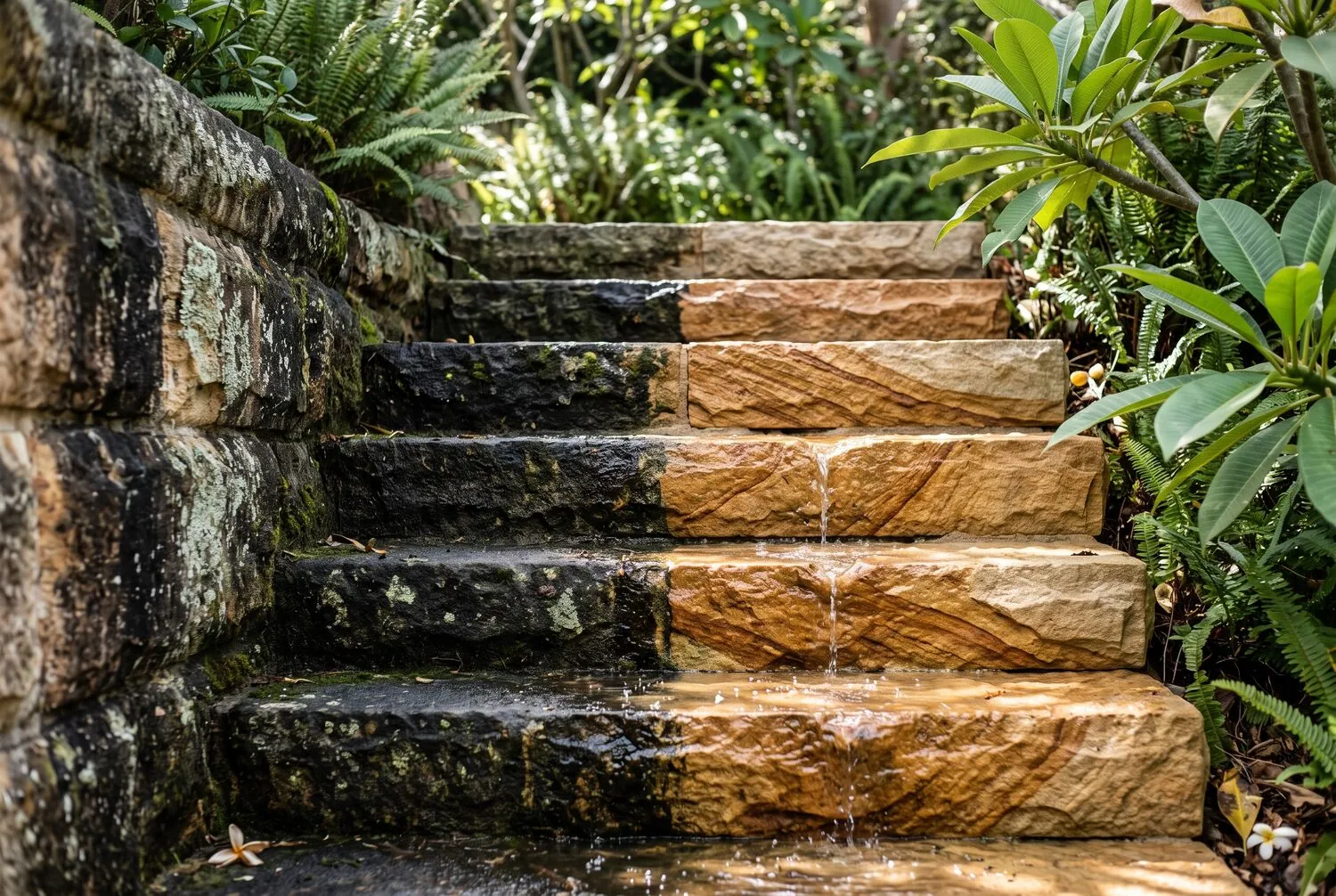
Surface dirt, organic growth, rust and dark discolouration are different problems. They may need different treatment, and some staining can remain after the surface is clean. We avoid promising a uniform new-stone appearance. Natural colour changes, previous damage and the movement of moisture through the stone can influence the final result.
Consider water, access and aftercare
The surrounding layout matters as much as the stone. Garden beds, adjacent metalwork, drainage and downhill areas are considered when planning work. We can assess sealing separately where appropriate, but a sealer is not a substitute for resolving persistent moisture or drainage issues. Newly cleaned stone still needs ordinary maintenance and sensible use.
What we look at before quoting.
- Assessment of stone condition and joint stability
- A test area where appropriate
- Agreed cleaning of sandstone surfaces
- Attention to adjacent materials and runoff
- Advice on remaining stains and maintenance
A clear scope before work begins.
Surface area is only part of the picture. The material, amount of growth, staining, access and protection needed all affect the work. Share the relevant details in your enquiry so the quote can be specific to your home.
Planning the visit in Darling Point.
If the property is managed by strata, identify the approved work areas and the person authorised to give access instructions. Entrance steps, shared paths and landscaped edges may need staging so residents retain an agreed route. Upper elevations and windows require a separate access assessment; they are not assumed reachable from photographs of the frontage alone. If older masonry sits beside newer paving or glazing, we consider the transition between materials when selecting the method. Existing leaks, loose joints and defective drainage should be raised before work starts. Cleaning can improve presentation, but it does not replace the building’s maintenance responsibilities.
Let us know about gates, steps, on-site parking, water access and any strata approval required. Identify sensitive landscaping, recently installed finishes and anything that should not get wet. These details help plan the work and reduce disruption on the day.
Understanding the finish.
Cleaning can remove surface dirt and growth, but cannot reverse etching, structural damage or worn coatings. Stains may respond differently and some marks can remain. Any limitations, test requirements or specialist repairs should be discussed before work is agreed.
Ask about your surfaces